


© Image Sign 2024
How Do I Get Custom Signs Made for My Shop? A Complete Guide
How Do I Get Custom Signs Made for My Shop? A Complete Guide
How Do I Get Custom Signs Made for My Shop?
Your shop sign is the first thing potential customers notice. At Image Sign, we design, manufacture and install bespoke shop signs in-house from our Sheffield workshop. We have been shop sign makers in Sheffield since 2007, and we have helped retailers across Sheffield, Rotherham and the wider UK turn blank shop fronts into distinctive brand assets.
This guide explains how to commission custom shop signs that perform. We cover sign types for retail, what to prepare, our four-stage process, and how to avoid common delays.
to commission bespoke shop signs that perform. We’ll cover the sign types that suit retail environments, what you need to prepare, how our four-stage process works, and how to avoid the delays and disappointments that derail too many shop signage projects.Choosing the Right Sign Type for Your Shop
The best sign for your shop depends on your location, budget, trading hours and the visual competition around you. Here’s how the main categories break down for retail use.
Shop Fascias and Flat Panel Signage
Flat signage remains the most cost-effective starting point for independent retailers and small chains. Printed aluminium composite panels, vinyl graphics applied to existing surfaces, or simple tray-style constructions give you clean branding without complex fabrication.
We manufacture Sign Tray signage in-house for clients who want a step up from basic flat panels. The returned edges create depth and shadow, and the construction hides fixings for a crisp, professional finish. Shop fascias built this way withstand UK weather for years with minimal maintenance.
Flat and tray options suit budget-conscious openings, secondary locations, or shops where planning restrictions limit projection and illumination. They’re not the most eye-catching choice on a crowded high street, but they deliver solid, reliable branding.
High-Impact 3D Signs and 3D Illuminated Signs
Three-dimensional signage transforms how your shop front performs. Built-up letters, fabricated logos and moulded elements catch light from multiple angles. They cast shadows that shift through the day. They create visual weight that flat graphics simply cannot match.
Our 3D signs use aluminium, acrylic or stainless steel construction depending on size, location and finish requirements. For evening trading or competitive high streets, we add LED illumination to create 3D illuminated signs that perform after dark without the running costs of older neon or fluorescent systems.
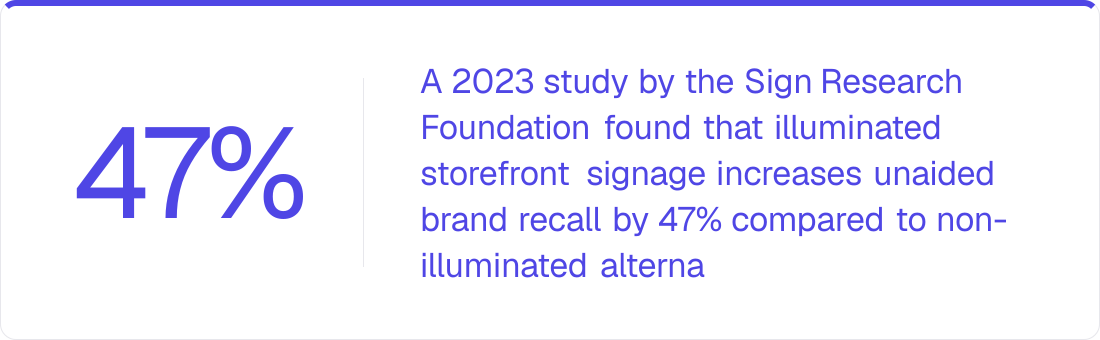
A 2023 study by the Sign Research Foundation found that illuminated storefront signage increases unaided brand recall by 47% compared to non-illuminated alternatives. That visibility translates directly to foot traffic for shops trading evening hours.
High-impact 3D signage costs more than flat options. The fabrication is more complex. The materials are heavier-duty. For shops in prime locations or crowded retail environments, the return on that investment typically justifies itself within the first trading year.
Illuminated Signs and Flex Face for Large-Format Retail Units
Illuminated signs using LED technology suit any shop that trades after 4pm through winter months, or any location where competitors already light up their fronts. We specify LED systems for all our illuminated work: they’re energy-efficient, long-lasting and maintain consistent colour temperature over time.
For large retail units, retail parks and supermarkets, we manufacture Flex Face signage-large-format illuminated tensioned fabric systems that deliver seamless graphics across spans of ten metres or more. The fabric diffuses LED backlighting evenly, eliminating the hot spots visible in older flex systems.
Flex Face works particularly well for shops with wide frontages where multiple small signs would look cluttered. The single graphic surface gives you brand impact at scale.
Post & Totem Signs and Monolith Signs for Visibility at Distance
Not every shop sits right on the pavement. Retail parks, business parks, converted industrial units and shopping centres often position stores back from the main flow of foot and vehicle traffic. Post & Totem signs solve that problem.
These freestanding vertical structures put your branding at eye level for approaching customers. We manufacture them with double-sided graphics, LED illumination options, and durable foundations suited to car park environments. Monolith signs-solid, substantial versions of the same concept-anchor larger retail developments and create landmark presence.
If customers currently struggle to find your unit, or if you compete with neighbouring shops that front the main thoroughfare while you’re tucked around a corner, Post & Totem signs redirect attention where you need it.
Our Four-Stage Process: How We Deliver Bespoke Signs
Commissioning shop signage shouldn’t feel uncertain. We’ve refined our process since 2007 to give retail clients complete visibility and control from first contact to final fix.
Stage 1: Requirements
Every successful sign project starts with understanding your site, not guessing from photographs. Our requirements stage covers:
- Site survey and precise measurements of your shop front, fixing surfaces and sightlines
- Regulatory checks against local planning constraints, landlord requirements and advertisement control rules
- Competition analysis of neighbouring signage to identify differentiation opportunities
- Budget and timeline confirmation so we specify materials and methods that match your parameters
We visit your premises in Sheffield, Rotherham or wherever you’re located across the UK. We photograph the site. We measure twice. We flag any access complications, electrical requirements or structural considerations before design work begins.
This stage prevents the costly surprises that derail projects: discovering your landlord prohibits illumination, realising the fascia substrate won’t support projected letters, or finding that your chosen position requires planning consent you hadn’t budgeted time for.
Stage 2: Design
With requirements locked down, our in-house designers develop artwork that works specifically for your site. We don’t recycle templates or force your brand into standard formats.
You’ll receive detailed proofs showing scale, colours, materials, illumination effects and fixing methods. We specify exact substrates, finishes and LED specifications. You approve every element before manufacture begins.
For shop fascias and 3D signs, we produce physical samples where colour matching or material texture is critical. For illuminated signs, we demonstrate lighting effects so you understand exactly how your sign performs at night.
Our Choosing a Design for your Shop Sign guide covers the decision criteria in more detail if you’re still weighing options.
Stage 3: Manufacture
Every sign we design is manufactured in our Sheffield workshop by the same team that surveyed your site and developed your artwork. No outsourcing to third-party fabricators. No quality gaps.
Our in-house manufacture gives us three advantages that matter to retail clients:
- Quality control at every stage – we inspect substrates, welds, paint finishes and electrical components as they’re produced, not after delivery from an external supplier
- Turnaround reliability – we control our own production schedule, so we don’t miss installation dates because a subcontractor delayed
- Problem resolution without delay – if a material batch arrives below standard or a detail needs refinement, we fix it immediately rather than waiting for supplier responses
We use aluminium composite, powder-coated aluminium, acrylic and stainless steel for exterior work. These materials withstand UK weather conditions for ten to fifteen years with minimal maintenance. Every sign we make carries our built to last promise.
Stage 4: Installation
Our dedicated team installs every sign we manufacture. They’re not general contractors fitting signage as a sideline. They’re specialists who understand structural loading, electrical safety, weatherproofing and the finishing details that distinguish professional installation from amateur work.
Installation includes:
- Safe removal and disposal of existing signage where required
- Structural fixing with appropriate anchors and brackets for your substrate
- Electrical connection and testing of all illuminated elements
- Final cleaning and protective film removal
- Photographic documentation for your records
We work around your trading hours where possible. Early starts, late finishes, weekend installations-we schedule to minimise disruption to your business.
How Long Does It Take to Get Custom Shop Signs Made?
Standard shop fascias and 3D built-up lettering typically take two to four weeks from approved artwork to installation. Complex illuminated projects, Flex Face systems or specialist finishes need additional time for prototyping and testing. Our in-house manufacture controls scheduling without subcontractor delays.
What to Prepare Before You Contact a Sign Maker
Preparation shortens lead times and reduces back-and-forth. Here’s what speeds your project along.
Brand Assets and Visual References
Gather your logo files in vector format (AI, EPS or SVG), your brand colour references (Pantone, CMYK or RGB values), and any examples of signage you admire or want to avoid. The more specific your brief, the faster we reach a design you’ll approve first time.
If you’re rebranding simultaneously, finalise your identity before commissioning signage. We’ve seen too many shop signs delayed because logo approvals slipped after manufacture had begun.
Site Information
Know your fixing surface material-brick, render, timber, aluminium cladding, glass-and its condition. Note any access restrictions: narrow streets, pedestrian zones, parking limitations. Flag any electrical supply location if you’re considering illuminated signs.
Photograph your shop front from multiple angles, including the approaches customers take. These images help us assess sightlines and competition context before we visit.
Regulatory and Landlord Requirements
Check your lease for signage restrictions. Some landlords prohibit illumination, specify maximum dimensions, or require design approval before installation. Conservation areas and listed buildings carry additional planning constraints.
Most shop fascia signs fall within permitted development rights. Illuminated signs, projections over public footpaths, or installations in conservation areas may require planning consent or advertisement control approval. We guide you through this process, but early awareness prevents delays.
The UK government’s Planning Portal provides definitive guidance on advertisement control at planningportal.co.uk.
Budget Parameters and Timeline
Be honest about your budget range. It doesn’t commit you to a figure, but it lets us propose materials and methods that match realistic expectations. A bespoke illuminated shop fascia with 3D built-up letters costs substantially more than a printed flat panel. Knowing your parameters prevents wasted design effort.
Similarly, share your target installation date. Standard shop fascias and built-up lettering typically run two to four weeks from approved artwork. Complex illuminated projects or specialist finishes need additional time for prototyping and testing.
Built to Last: Materials, Finishes, and Aftercare
Shop signage sits outside through every season. The materials we specify determine how it looks in year five, not just on installation day.
Exterior-Grade Substrates for UK Conditions
We specify aluminium composite, powder-coated aluminium, acrylic and stainless steel for all exterior shop signs. These materials resist corrosion, UV degradation and thermal expansion across temperature ranges from -10°C to 35°C.
Powder coating outperforms wet paint for exterior durability. It creates a harder, more uniform finish that resists chipping and fading. We specify polyester powder coat for standard applications, and marine-grade variants for coastal locations where salt spray accelerates corrosion.
Acrylic faces for illuminated signs use UV-stabilised grades that prevent yellowing. LED modules sit behind diffusers that spread light evenly without the dotting visible in cheaper systems.
Illumination Options and Energy-Efficient LED Systems
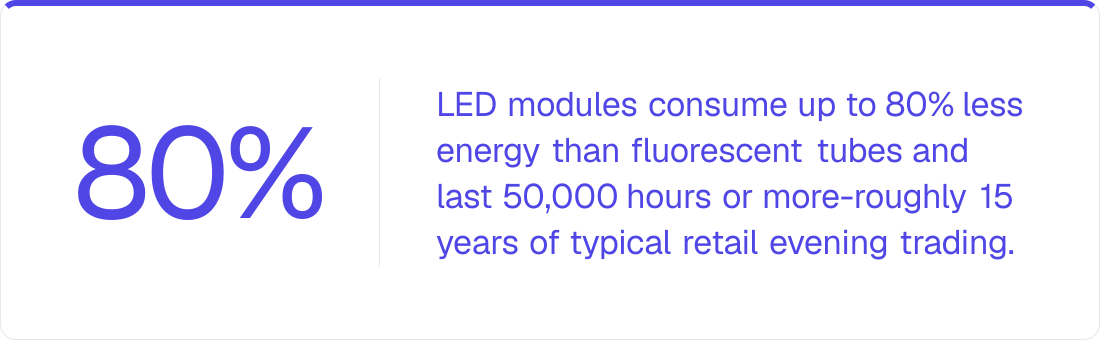
All our illuminated signs use LED technology exclusively. LED modules consume up to 80% less energy than fluorescent tubes and last 50,000 hours or more-roughly 15 years of typical retail evening trading.
We specify colour temperature to match your brand environment: warm white (3000K) for hospitality and traditional retail, neutral white (4000K) for contemporary fashion and technology, cool white (6000K) for clinical and professional services.
RGB LED systems allow colour-changing effects for promotional periods or seasonal branding. These cost more upfront and require more complex control systems, but they give retail chains flexibility that static illumination cannot match.
Maintenance and Longevity for Retail Signage
Even the best materials benefit from basic care. We recommend annual inspection of fixings, sealants and electrical connections. Clean acrylic and aluminium surfaces with mild detergent and soft cloths-abrasive cleaners scratch finishes and accelerate degradation.
LED systems rarely fail entirely. Individual module replacement addresses the occasional fault without full sign dismantling. We keep records of every sign we install, so we can supply matching components years after original manufacture.
Our built to last promise means we specify for longevity from day one. The slight premium for proper materials and fabrication pays back many times over a sign’s service life.
Do I Need Planning Permission for Shop Front Signs?
Most shop fascia signs fall within permitted development rights. Illuminated signs, projections over public footpaths, or installations in conservation areas may require planning consent or advertisement control approval from the local authority. We assess regulatory requirements during our initial site survey and guide clients through any necessary applications.
Start Your Shop Sign Project
Getting custom signs made for your shop starts with a conversation. We’ll ask about your location, your trading patterns, your brand and your budget. We’ll survey your site, develop designs you’ll approve with confidence, manufacture everything in our Sheffield workshop, and install with our dedicated team.
Typical lead times run two to four weeks from approved artwork for standard shop fascias and 3D built-up lettering. Complex illuminated projects, Flex Face systems or specialist finishes extend that timeline, but we communicate realistic schedules upfront and stick to them.
We’ve produced business signage for retailers across Sheffield, Rotherham and throughout the UK since 2007. Every project follows the same process: requirements, design, manufacture, installation. You get clear communication, exact manufacturing, and a finished product built to last.
If you’re weighing sign types or need guidance on what works for your specific shop front, our Choosing Business Signs for your Shop guide covers the decision framework in detail. For what can legally and practically appear on your frontage, see What Can Be Included On Shop Front Signs?.
When you’re ready to move from planning to production, we’ll be here to deliver.
Frequently Asked Questions
What should I use for illuminated shop front signage?
Illuminated signs using LED technology-such as built-up letters, Sign Tray signage with LED backlighting, or Flex Face systems for large-format tensioned fabric-offer the best visibility and energy efficiency for shop fronts that operate evening hours or compete on busy high streets. LED modules consume up to 80% less energy than older fluorescent systems and last approximately 50,000 hours. We specify colour temperature to match your brand environment, from warm 3000K for traditional retail to cool 6000K for professional services.
How do I get custom signs made for my shop?
Commissioning bespoke shop signs follows four clear stages: requirements gathering and site survey, design development with proofs and approvals, in-house manufacture using specified materials and finishes, and professional installation by a dedicated team. At Image Sign, we manage all four stages from our Sheffield workshop without outsourcing, maintaining quality control and schedule reliability throughout. Typical turnaround from approved artwork to installation ranges from two to four weeks for standard shop fascias and built-up lettering.
What is the difference between 3D signs and flat signs for retail?
3D signs-built-up letters, fabricated logos, and moulded elements-create high-impact visual depth that catches light and draws attention from angles; flat signs such as printed panels or vinyl graphics offer cost-effective branding where budget or planning restrictions limit projection. Three-dimensional signage typically costs more but delivers stronger competitive presence on crowded high streets. Flat and tray options remain practical for secondary locations, budget-conscious openings, or where landlord restrictions prohibit protruding elements.
How long does it take to manufacture and install shop signage?
Typical turnaround from approved artwork to installation ranges from two to four weeks for standard shop fascias and built-up lettering, with complex illuminated projects or specialist finishes requiring additional time for prototyping and testing. Our in-house manufacture controls scheduling without subcontractor delays. We confirm realistic timelines during the requirements stage and communicate any adjustments immediately if material availability or site access complications arise.
Do I need planning permission for shop front signs?
Most shop fascia signs fall within permitted development rights, but illuminated signs, projections over public footpaths, or installations in conservation areas may require planning consent or advertisement control approval from the local authority. We assess regulatory requirements during our initial site survey and guide clients through any necessary applications. Checking your lease for landlord restrictions before commissioning design work prevents costly redesigns later in the process.
What materials last longest for exterior shop signs?
Aluminium composite, powder-coated aluminium, acrylic, and stainless steel withstand UK weather conditions for ten to fifteen years with minimal maintenance; we specify these for all exterior work and back every sign with our built to last promise. Powder coating outperforms wet paint for hardness and UV resistance. UV-stabilised acrylic prevents yellowing in illuminated signs. Marine-grade powder coat variants suit coastal locations where salt spray accelerates standard material degradation.
What are Post & Totem signs and when do shops need them?
Post & Totem signs are freestanding vertical structures that increase visibility for shops set back from the road, located within retail parks, or positioned where pedestrian flow approaches from multiple directions. We manufacture them with double-sided graphics, LED illumination options, and durable foundations suited to car park environments. Monolith signs serve similar purposes with greater visual mass for landmark presence in larger retail developments.
REQUEST A QUOTE